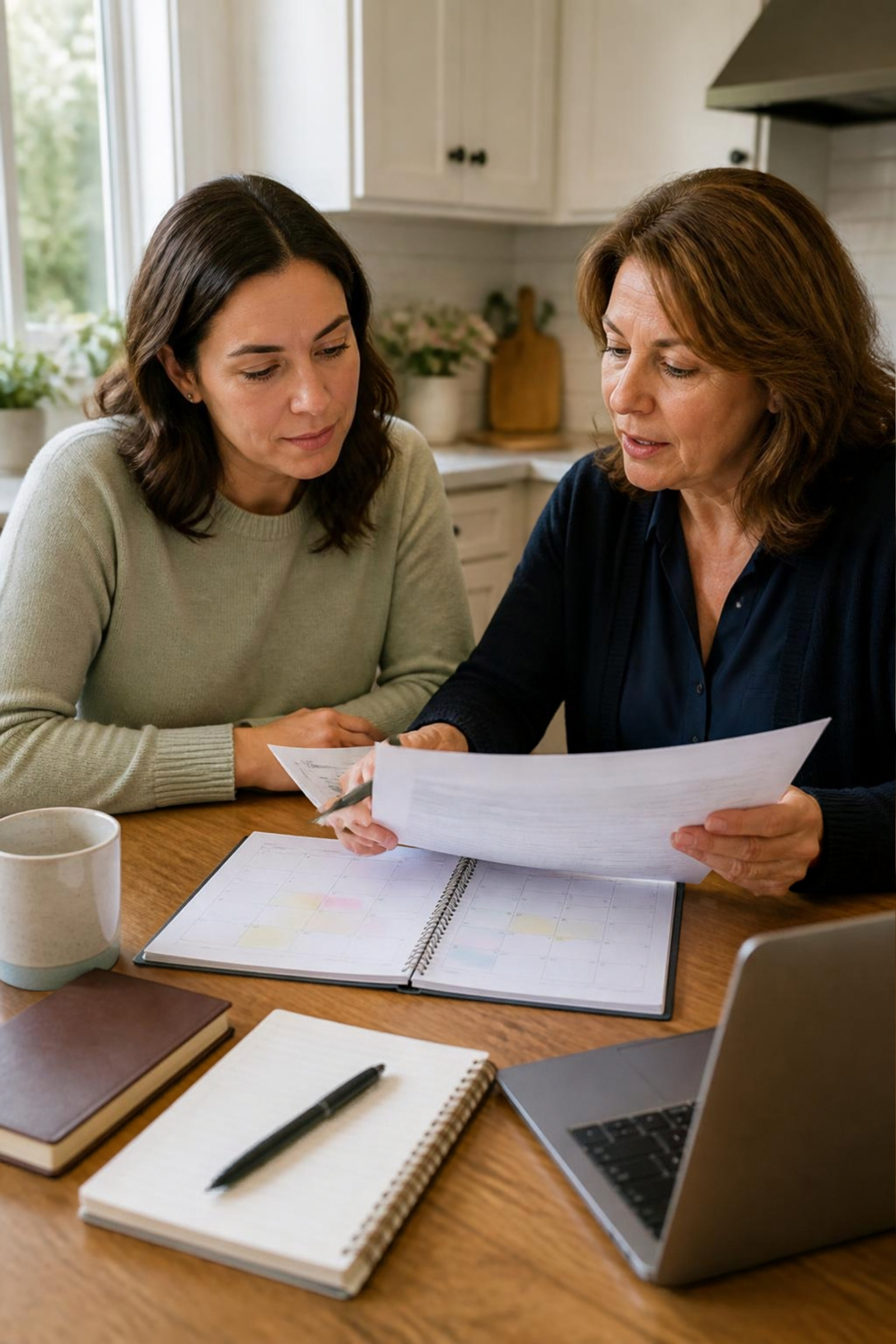
When people picture home care, they usually picture personal care — help with bathing or dressing. What's easy to overlook is how much independence actually depends on the quieter, everyday work of running a household. That's what homemaker services cover, and it's often the support that keeps a parent safely in their own home the longest.
1. Meal planning that actually happens
Cooking for one person, several times a day, every day, is a bigger task than it sounds — and it's one of the first things to slip when energy or mobility declines. Homemaker support includes meal planning so nutrition doesn't depend on whether today was a good or a hard day.
2. Groceries, without the trip
Grocery shopping assistance means the pantry and fridge stay stocked with what a senior actually eats, without the physical toll (or driving risk) of a weekly store trip.
3. A home that's easier to manage
General home management — tidying, laundry, basic upkeep — sounds minor until it isn't done. A cluttered home is also a less safe one, especially for anyone managing mobility or balance issues. Keeping the home orderly is itself a fall-prevention measure.
4. Medication reminders that reduce risk
Medication reminders are part of nearly every care plan we build, homemaker or personal care alike. Missed or doubled-up doses are one of the more common (and preventable) risks for seniors managing multiple prescriptions.
5. Appointments that don't get missed
Scheduling medical appointments and keeping track of them is easy to underestimate until a specialist visit gets missed or double-booked. This is where homemaker support connects with our broader care coordination service to keep the whole picture organized.
Independence, not dependence
The point of homemaker services isn't to take over — it's to remove the tasks that have become genuinely hard, so a senior can keep doing the things they still want to do without the household falling into disrepair around them. For a lot of families, this is the very first service that opens the door to broader care conversations, simply because it solves the most visible, most stressful problem first.
If mail is piling up, meals are getting simpler, or the fridge tells a different story than it used to, a free consultation can help you figure out exactly what kind of support would help most.