When families first call about in-home care, one of the first questions is usually some version of "what's actually included?" Two of our most common services — personal care and companion care — get confused for each other because they're often provided by the same caregiver in the same visit. But they solve different problems.
What personal care covers
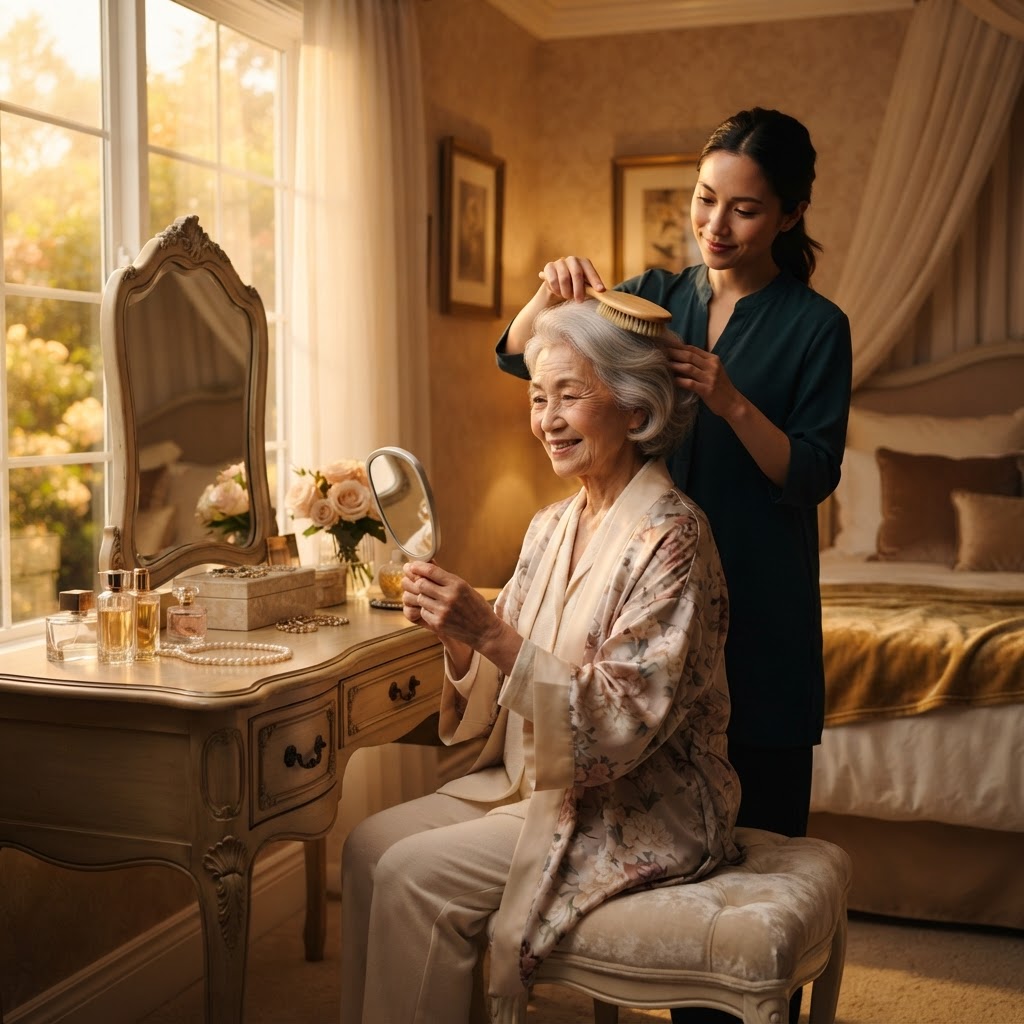
Personal care is hands-on help with the physical routines of a day: bathing, dressing, grooming, toileting, and medication reminders. It's the kind of support that matters most when a task has become physically difficult or unsafe to do alone — getting in and out of the shower safely, for example, or remembering which pills come with breakfast.
This is help delivered with dignity and privacy in mind, at the pace and preference of the person receiving it. It's usually the first service families add when independence with self-care starts to slip.
What companion care covers
Companion care is built around connection rather than physical assistance. A companion caregiver spends time with your loved one — conversation, games, hobbies, walks, cognitive engagement — and simply being present so the day doesn't feel isolating.
Isolation is a quiet risk for seniors who live alone or whose family is spread out. Companion care addresses that directly, and it's often what makes the biggest difference in someone's mood and outlook, even when their physical needs are minimal.
How families usually combine them
Many care plans include both. A caregiver might help with a morning routine — personal care — and then stay for a game of cards or a walk around the block — companion care — in the same visit. Our Standard Care plan includes personal hygiene, dressing, and bathing alongside recreation and companionship for exactly this reason: the two rarely stand alone in real life.
How to decide where to start
Ask which is harder for your loved one right now: managing physical self-care tasks safely, or getting through long stretches of the day without company. If it's the first, start with personal care. If it's the second, start with companion care. If it's both — which is common — a blended plan built around your family's actual routine is usually the right answer.
A free consultation is the easiest way to sort this out. We'll ask about a typical day, listen to what's changed, and recommend the mix of support that actually fits — not a generic package.