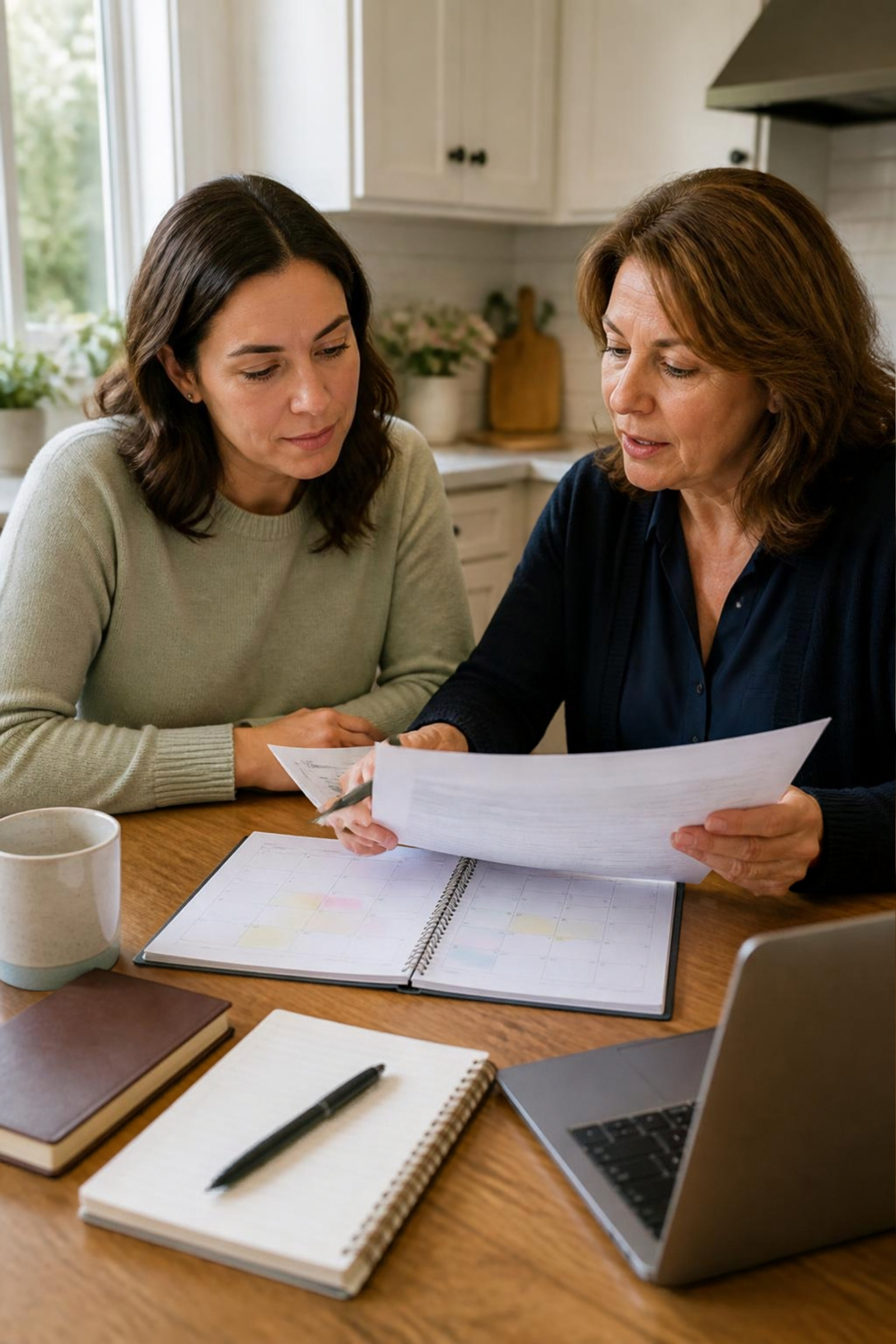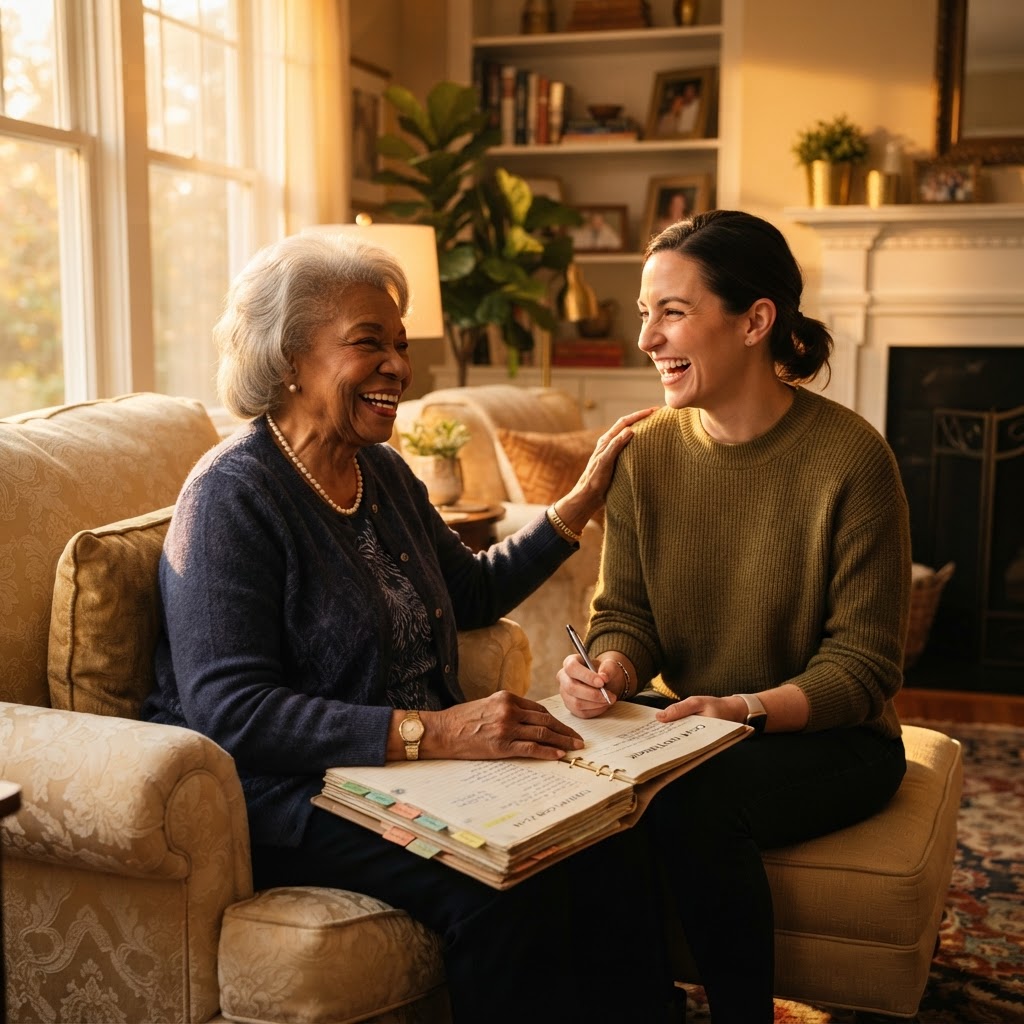
The first conversation about in-home care carries a lot of weight — it's often the moment a family finally says out loud what they've been noticing for weeks. A little preparation beforehand makes that conversation more useful, and less overwhelming, for everyone in the room.
Think through a typical day first
The single most useful thing to bring isn't a document — it's a clear picture of what an ordinary day actually looks like for your loved one right now: what they manage on their own, what's become difficult, and what a family member has quietly started doing for them. Specifics help far more than general impressions.
Note what's changed recently
Consultations go further when they're grounded in real, recent examples: a fall, a missed appointment, a skipped meal, a moment of confusion. If there's a specific event that prompted the call, it's worth mentioning early — it's often the clearest signal of what kind of support matters most right now.
Gather the basics, loosely
A rough list of current medications, any relevant diagnoses, and the names of other people involved in care (a spouse, another sibling, a primary doctor) helps, but none of it needs to be polished or complete. The family consultation itself is built to fill in gaps, not test how prepared you are.
Bring your actual questions
There's no question too basic. Common ones worth bringing include: What exactly is included at each care level? How are caregivers matched? What does the trial period look like? How will the family stay updated? Write them down beforehand — it's easy to forget half of them once the conversation is underway.
Include your loved one where possible
When your loved one is willing and able to take part, involving them in the consultation — even briefly — tends to make the resulting plan fit better and be more readily accepted. Care built around someone, without them in the room, is a harder plan to introduce later.
There's no wrong way to start
Some families arrive with a clear sense of what they need; many arrive only knowing that something has to change. Both are a completely normal place to start — the consultation is designed to work from wherever your family actually is, not from a script you're expected to follow.
If you're getting ready for that first call, a free consultation is exactly the conversation this guide is preparing you for — no pressure, and no obligation to decide anything on the spot.