Seattle winters are milder than much of the country, but wet, sometimes icy walkways, shorter daylight hours, and colder indoor temperatures still raise real risks for seniors — particularly around falls and isolation. A few practical steps make a meaningful difference.
Walkways and entry points
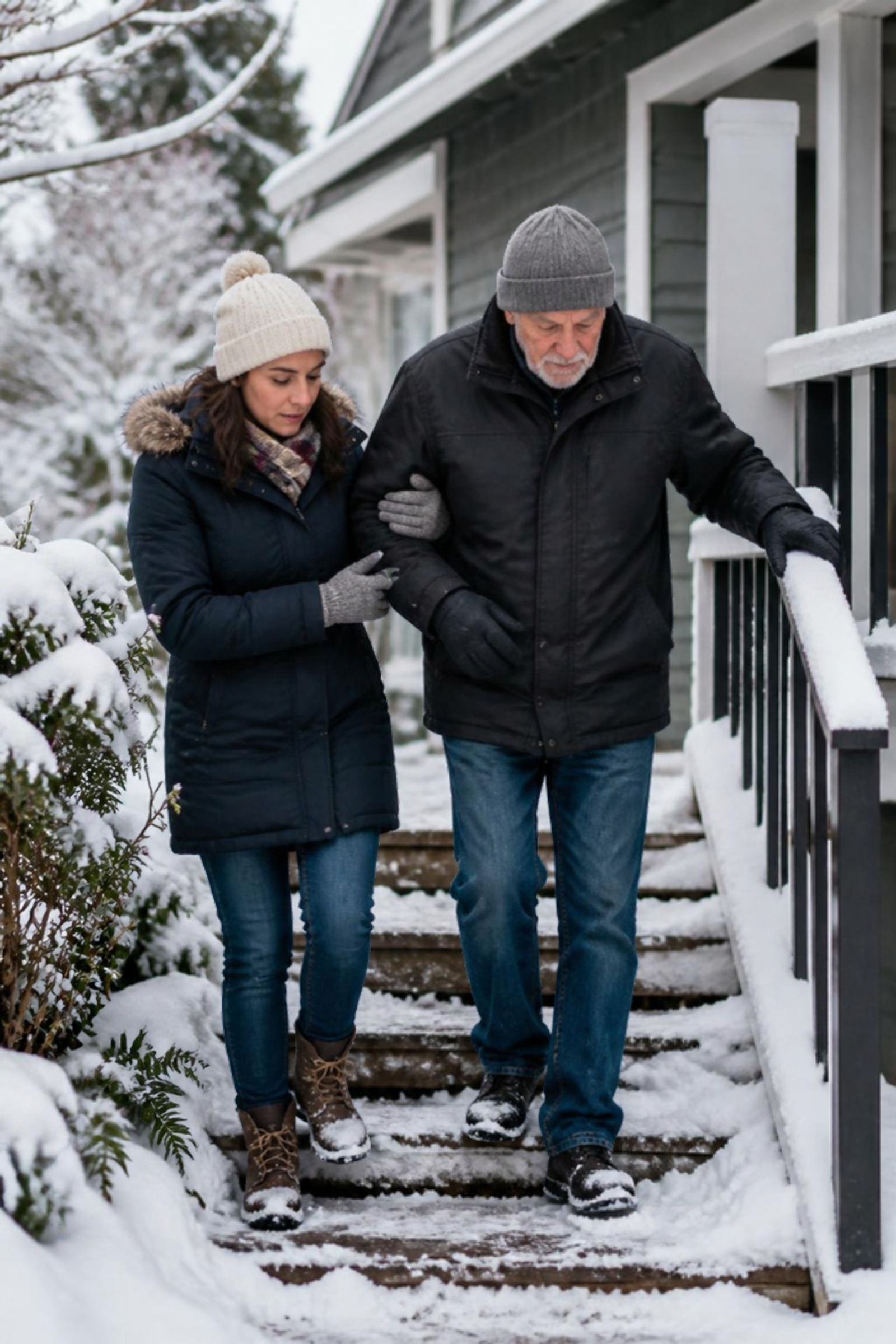
Wet leaves and light ice are common on Pacific Northwest steps and walkways through the winter months. Keep entry paths clear, add a non-slip mat just inside and outside the door, and make sure outdoor lighting is bright enough to see footing clearly once it gets dark by late afternoon.
Footwear matters more than people expect
Shoes with good tread and a secure back — not slippers or loose sandals — make a real difference on wet or uneven surfaces. It's worth checking that the shoes actually worn around the house and yard in winter still have grip left on the soles.
Keeping warm without raising other risks
Maintaining a comfortably warm indoor temperature matters more for older adults, whose bodies regulate temperature less efficiently. Space heaters are a common fall and fire hazard when placed in a walkway or too close to bedding or curtains — keep them on a stable surface, away from foot traffic, and never left running unattended overnight.
Shorter days and isolation
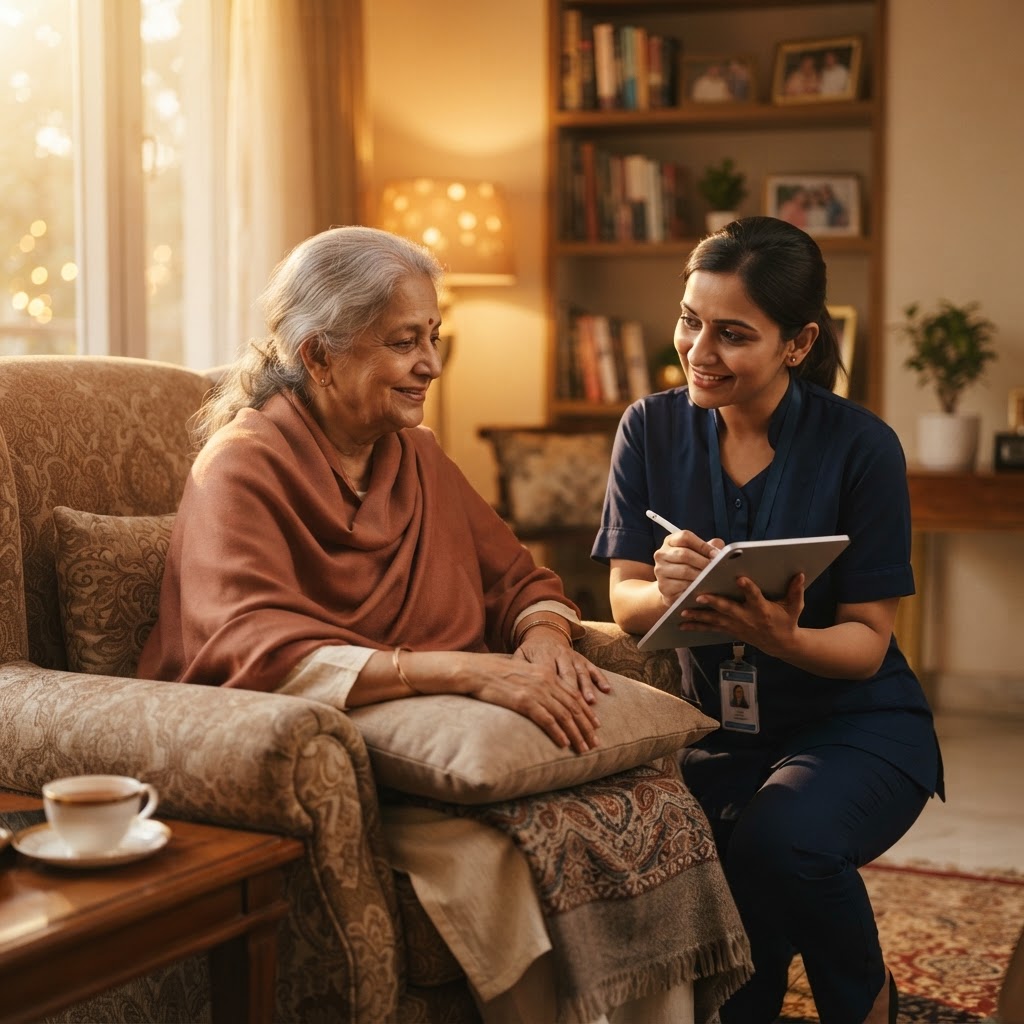
Less daylight and worse weather often mean fewer outings and less casual social contact — both of which can affect mood more than people expect. Regular, scheduled visits matter more in winter, not less, precisely because the natural contact that happens in nicer weather (a walk, a neighbor stopping by) happens less often.
Driving and errands
If your loved one still drives, wet roads and darker evenings are worth an honest conversation about which trips still make sense to do alone. Handling grocery runs and appointment transportation on the harder days is often one of the simplest, most appreciated pieces of support a caregiver provides.
Where support fits in
Winter is a common season for families to add homemaker services or companion care — not because anything has necessarily changed physically, but because the season itself adds risk and reduces the natural rhythm of getting outside and staying connected.
If winter has you thinking about extra support for a parent living alone, a free consultation is a good way to figure out what would actually help this season.