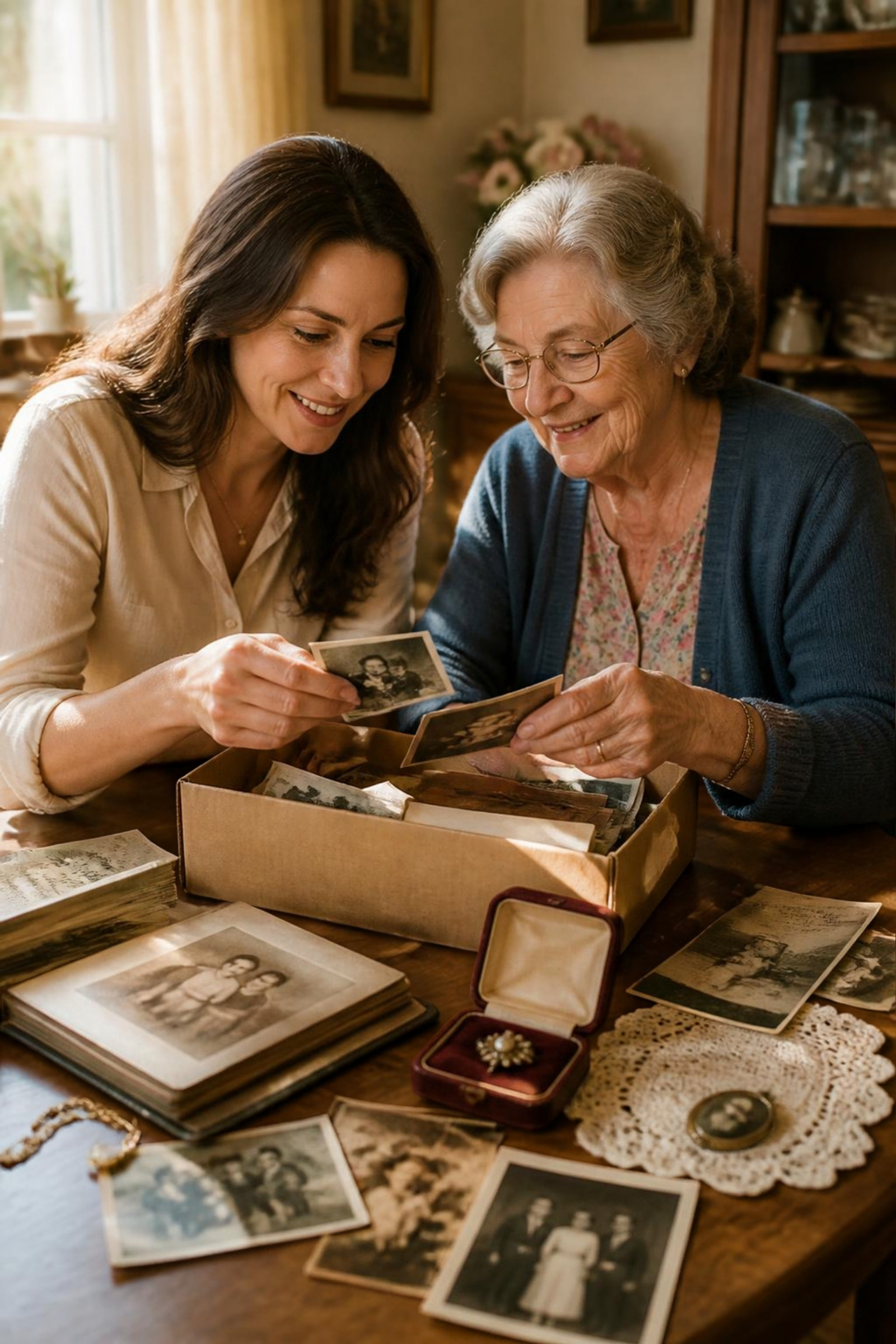
A home lived in for decades accumulates more than clutter — it accumulates history. Helping a parent downsize or declutter is rarely a simple logistics project, and treating it like one is usually where these efforts go wrong.
Why it matters for safety, not just space
Clutter is a genuine fall hazard — loose items on stairs and floors, narrow pathways through overfilled rooms, precarious stacks that get reached for or leaned on. Beyond safety, a more manageable home is simply easier to keep clean and navigate as mobility changes, which is exactly why this is worth doing before it becomes urgent.
Start with safety, not sentiment
Rather than opening with "let's get rid of things," start with specific safety-driven changes: clearing a walking path, removing a stack of boxes from the stairs, freeing up space around a frequently used chair. These changes are easier to agree to and build trust for the harder conversations later.
Go slowly, and let your parent lead
Sorting through a lifetime of belongings is emotional work, and rushing it tends to create resistance rather than progress. Small sessions — one drawer, one closet, one afternoon at a time — are far more sustainable than trying to clear a whole house in a weekend, and they keep your parent genuinely involved in decisions rather than having things decided around them.
Useful categories, not just "keep or toss"
A middle category — "not sure yet" — takes the pressure off an immediate decision on every single item and usually gets resolved naturally on a second pass. Photos and documents are worth their own separate, unhurried session; they're rarely about space and almost always about memory.
Watch for what clutter might be signaling
A home that's become significantly harder to navigate, or where clutter has visibly worsened over recent months, is sometimes an early sign that daily tasks like tidying and laundry have become difficult — worth a gentle look at whether homemaker services might help with the ongoing upkeep, not just a one-time clear-out.
Doing it before a crisis, not during one
Families who wait until a health event or a forced move to sort through decades of belongings are doing genuinely hard emotional work under real time pressure. Starting gradually, while there's no urgency, is kinder to everyone involved — including the parent whose home and history are being sorted through.
If a parent's home has become harder to manage and you're not sure where to start, a free consultation can help you think through what kind of ongoing support might make daily life easier, downsizing included.