Limited mobility doesn't mean no movement is possible — it usually means finding the right kind. Staying active, even gently, helps maintain strength, balance, and mood, all of which directly affect independence and fall risk. As always, check with a doctor before starting anything new, especially with existing health conditions.
Chair-based exercises
For anyone who tires quickly or has balance concerns, seated exercises offer real benefit with much lower risk:
- Seated marching — lifting knees one at a time while seated
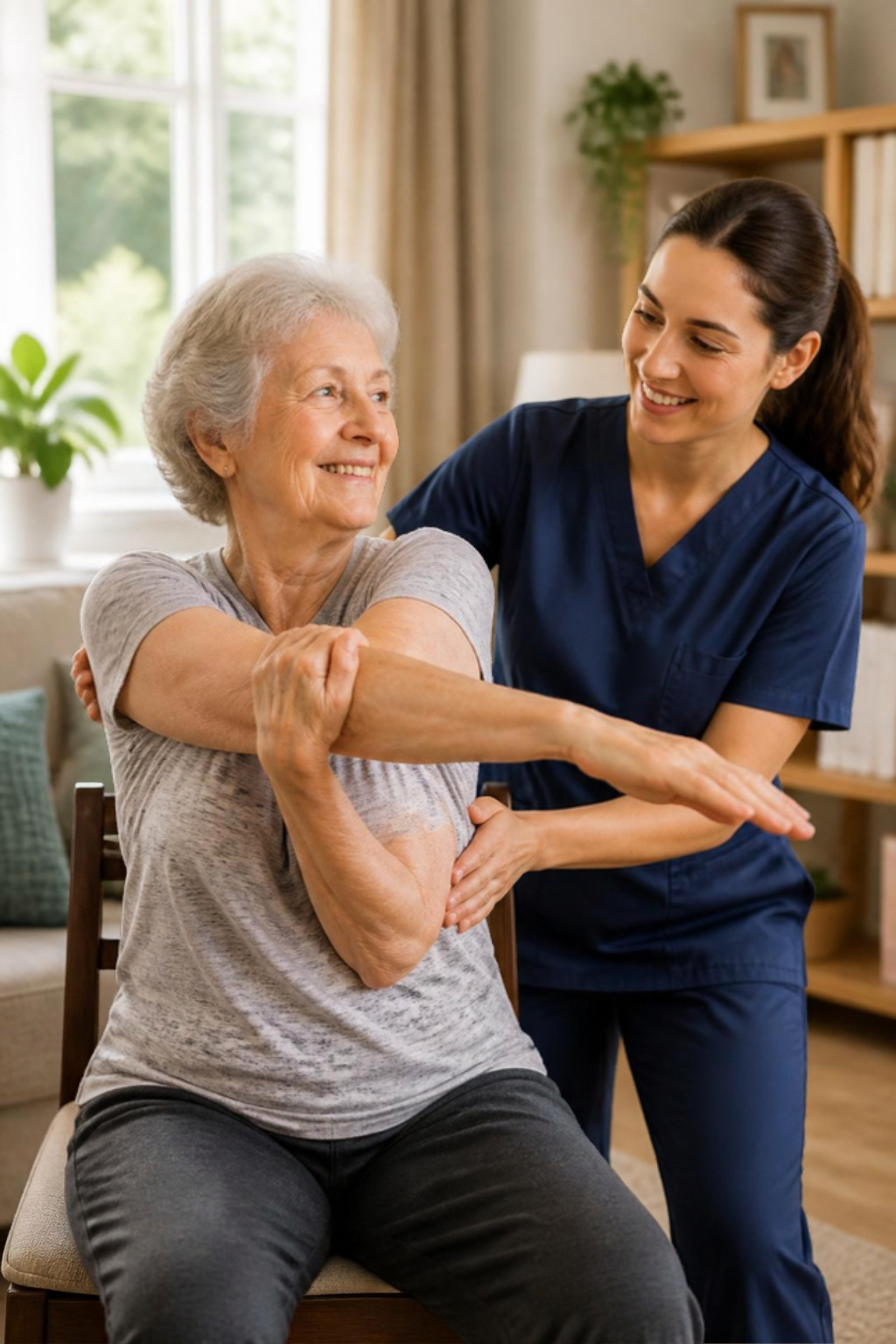
- Arm raises and gentle stretches, held for a few breaths
- Ankle circles and toe taps, which support circulation and lower-body strength
- Seated torso twists, gentle and within a comfortable range
Standing exercises with support
For those who can stand with some support — a chair back, a counter, a wall:
- Standing marches, holding a stable surface
- Heel raises, rising onto the toes and back down slowly
- Gentle standing side leg lifts, one at a time
Walking, even in short stretches
Short, regular walks — around the living room, down a hallway, to the mailbox and back — do real work for circulation, mood, and stamina, even at a slow pace. Consistency matters more than distance; several short walks through the day are often more sustainable than one long one.
Simple stretching for comfort and range of motion
Gentle stretching of the shoulders, neck, and legs — held briefly, never forced into pain — helps maintain the range of motion that makes everyday tasks like dressing and reaching easier.
Making it something to look forward to
Exercise is far easier to sustain with company. A companion care caregiver can turn a stretching routine or a short walk into a social moment rather than a chore — someone to talk with, to count reps with, and to make sure it happens consistently rather than getting skipped on a hard day.
When to stop and check in
Any new pain, dizziness, or shortness of breath during activity is a signal to stop and check with a doctor before continuing. Gentle and consistent is the goal here, not pushing through discomfort.
If mobility has become more limited and you're not sure what's safe to try, that's exactly the kind of question worth raising during a free consultation — we can talk through what a caregiver's support might look like day to day.